How Coating Robots Improve Dry Dock Planning

10 min
Maritime Coating Solutions
14 October 2026

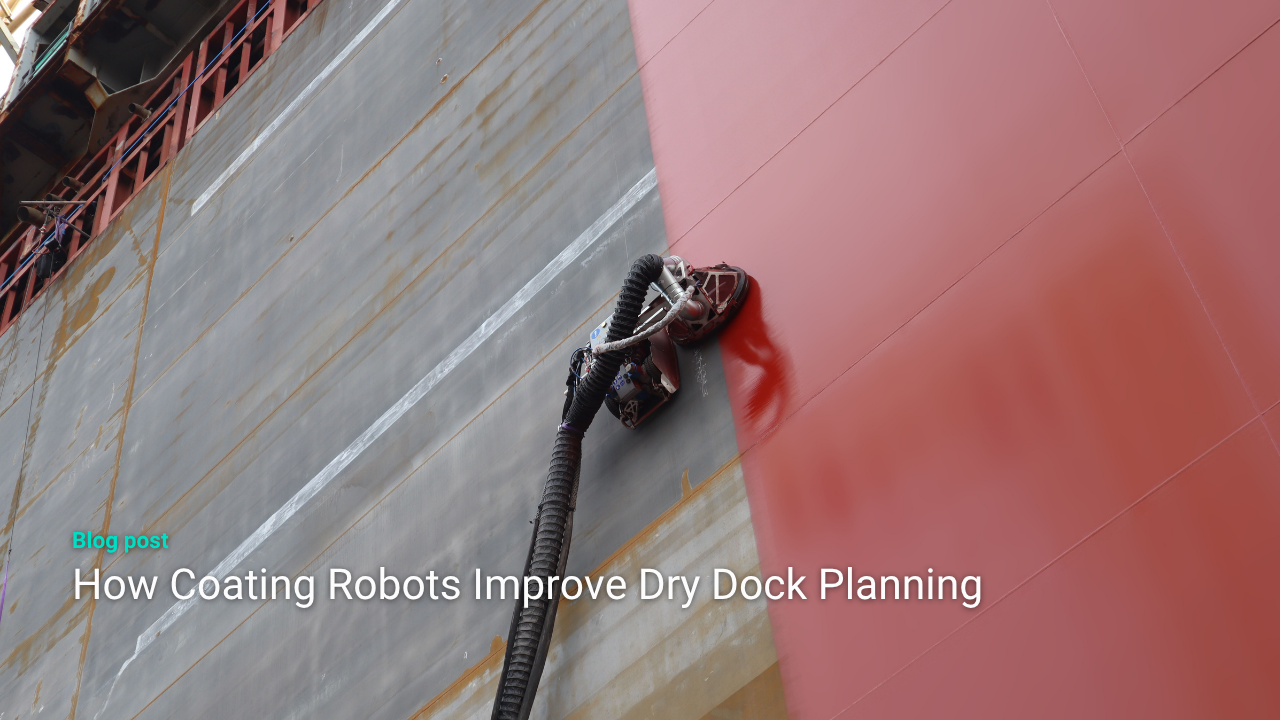
Semi-autonomous coating robot applying antifouling on a ship hull in dry dock

How Industrial Coating Robots Improve Dry Dock Planning

Coating robots are redefining how shipyard maintenance teams approach dry dock scheduling. Even when the coating process may not be the largest part of the docks’ critical path, any delays in this single step can cause costly extended berth times.


If you are a vessel owner or a project manager, you already know every day a vessel spends in dry dock is a day it earns nothing. Or worse, it earns nothing while still costing you money.


With industrial coating automation now proven in maritime environments, maintenance planners can lock in tighter windows and reduce the uncertainty that has long plagued conventional application workflows.


Qlayers delivers robotic coating technology purpose-built for ship hulls, storage tanks, and offshore assets. The result is a dry dock planning process where coating duration becomes predictable, hazard exposure drops, and environmental compliance is built into every application cycle.


This article explains how semi-autonomous coating robots can change dry dock planning and execution, from shortened coating windows to improved schedule predictability.

Key Takeaways: How Coating Robots Improve Dry Dock Planning

  • Semi-autonomous coating robots shorten the coating phase of dry docking by delivering consistent application speeds up to 600 m2/h, with average speeds between 450 – 500 m2/h.
  • Robotic coating reduces schedule variability because automated systems maintain output thanks to less dependency on crew availability or weather factors like strong winds.
  • The Qlayers 10QX Robotic Coating System reduces working hours at heights by up to 85%, directly lowering safety risk during dock periods.
  • Digital reporting from robotic systems creates coating traceability records that support project troubleshooting as well as regulatory audits.
  • Shifting from conventional application to automated coating allows planners to allocate free dock days to other critical maintenance tasks.

Why Coating is the Bottleneck in Dry Dock Scheduling

Prior to the actual coating process, surface preparation needs to happen. Following that is primer application, intermediate coats and topcoats, each with mandatory drying intervals that depend on temperature and humidity.


Failing to conform to the drying intervals can lead to coating defects.


When crew apply coatings by hand, output rates vary significantly from shift to per shift or even person to person.


Fatigue, skill differences, and physical demands of the job introduce inconsistencies that are difficult to plan around.


For fleet managers and technical superintendents, this unpredictability translates directly into financial exposure. Every additional day in dock means lost charter revenue, port fees, and disrupted voyage schedules.

How Do (Semi-Autonomous) Coating Robots Shorten Dry Dock Coating Windows?

Semi-autonomous robotic coating systems shorten the coating phase by maintaining consistent application speeds that conventional methods cannot match.


The Qlayers 10QX Robotic Coating System, for example, applies coatings at speeds up to 600 m²/h with consistent layer thickness across surfaces.


Consistent layer thickness also supports eligibility for extended paint warranties, reducing the frequency of future coating cycles and the associated dock time.


Because the 10QX operates through wireless remote control from ground level, there is no need to erect and dismantle between coating stages. Combining this with robotics solutions for surface preparation and inspection, project managers benefit from eliminating one of the most significant time drains in conventional dry dock coating workflow.


Robotic systems also reduce drying-window risk. Precise film thickness control means each coat meet its DFT specification on the first pass, reducing potential reworks that pushes coating schedules into overtime.

What Role Does Overspray Control Play in Dry Dock Efficiency?

Uncontrolled spray drift during hull coating creates problems beyond paint waste. It contaminates adjacent dock infrastructure, triggers clean-up delays, and can halt parallel work streams in nearby berths. And in some more extreme cases, overspray can damage nearby property and strain relations between shipyards and surrounding community.

“In almost every conversation we have with shipyards right now, environmental concerns come up within the first few minutes. Yards tell us they are facing stricter regulations. At the same time, cities are growing around them, and it is not uncommon to hear complaints regarding overspray that ends up on cars and property. One yard told us the wind turned during a spray window and carried paint particles straight over a nearby car dealer’s fleet. The yard manager had to pay to repaint 75 cars, a bill of around €250,000.


In some regions, governments are even discussing whether shipyards should move away from their current locations. Many of these yards sit in great locations, and they want to stay there. To do that, they need new ways of working, and controlled robotic application is one of them.”
Philip Roos

Business Development Maritime & Offshore at Qlayers.

Thanks to this controlled application, Qlayers’ robotic coating system reduces paint consumption by up to 35%, which lowers procurement costs and VOC emissions. It also cuts down the amount of paint particles released, helping to reduce microplastic pollution in nearby waters.

How Robotic Coating Improves Worker Health and Safety During Dry Dock Period

Coating ships in dry dock involves extensive work at height on scaffolding, suspended platforms, and staging systems. Reducing this exposure is both a regulatory requirement and a planning variable, because safety incidents cause unplanned schedule disruption.


The 10QX Robotic Coating System operates via remote operation from ground level. Operators control the magnetic crawler robot through a wireless interface, reducing working hours at height by up to 85%. This engineered approach to safety means fewer personnel on elevated platforms and fewer potential delay-causing incidents.


Ground-level operation also simplifies shift handovers and reduces administrative overhead associated with confined-space and height-access permits.

In addition, our patented spray-shielding system limits the amount of paint that escapes into the environment. Because less overspray drifts through the work area, crews are also less exposed to hazardous paint substances.


How Does Digital Reporting Support Dry Dock Planning and Compliance?

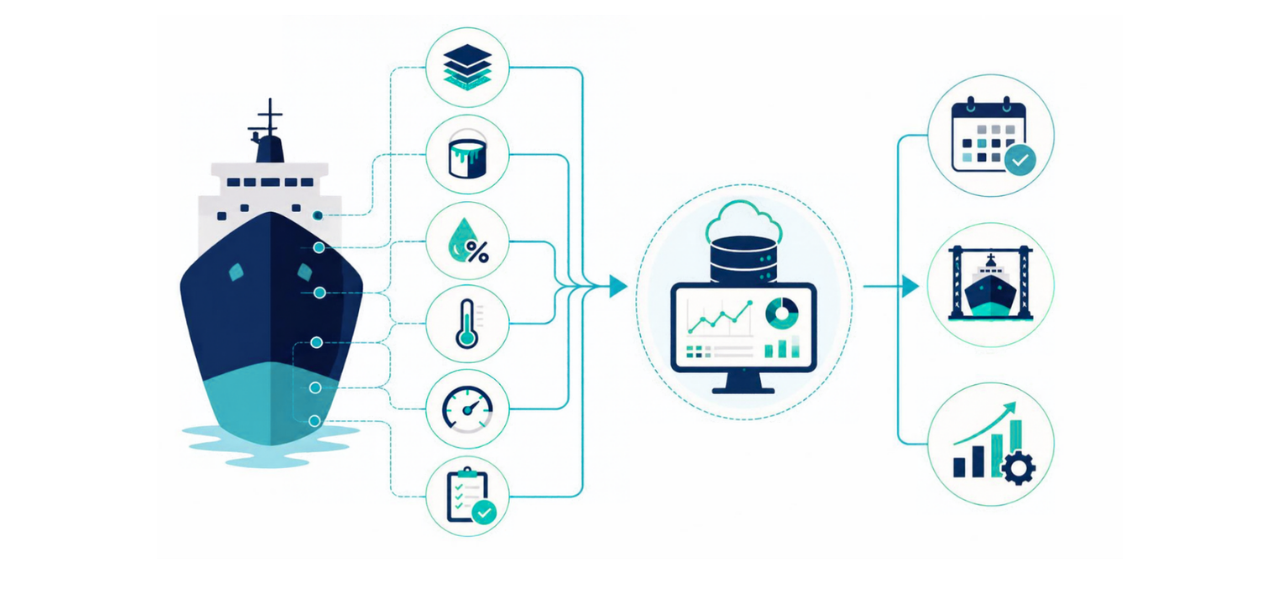
Robotic coating systems generate detailed application data during the job. The Qlayers data-driven approach captures layer thickness measurements based on indirect measurements, temperature and humidity conditions, paint consumption figures, and application speed logs in real time.

Infographic of maritime coating workflow


This data serves two purposes in dry dock planning. Firstly, it creates an auditable record that satisfies classification society and support inspection requirements.  


Secondly, it feeds back into future dry dock schedules, allowing planners to build coating duration estimates on actual performance data rather than historical averages. 

An added benefit is faster troubleshooting. Because the system displays real-time data on screen, operators can share exactly what they are seeing with Qlayers’ project support team. This makes it easier to pinpoint the cause of an issue, agree on a fix and get the robot back to work quickly, keeping downtime and schedule impact to a minimum. 

What Impact Do Coating Robots Have on Dry Dock Timeline Control?

Schedule predictability is one of the most valuable outcomes of robotic coating in a dry dock context. Conventional coating output varies with ambient conditions, crew fatigue and the complexity of the hull geometry. Automated systems hold a consistent pace regardless of these variables.


When Qlayers’ 10QX Coating Robots maintain a steady application rate of up to 600 m2/h on ship hulls even in windy conditions of up to 4 bft, planners can calculate coating duration with confidence and commit to berth release dates earlier. This predictability benefits the entire shipyard operation, because it frees dock capacity on the next vessel on schedule.


It also vies vessel operators more accurate voyage-resumption dates, reducing the commercial disruption that unpredictable dry dock durations create.

How Coating Robots Help Shipyards Manage Maritime Coating Challenges?

Shipyards face converging pressures: tighter environmental regulations, a shrinking pool of experienced coating applicators, and growing demand for faster turnaround times. Each of these factors complicates dry dock planning.


Automated coating addresses all three. Robotic systems reduce dependence on specialist labour, which means coating schedules are less vulnerable to workforce availability. They operate with minimal VOC release and virtually no overspray, keeping shipyards compliant with local environmental requirements. And their consistent speed compresses the coating window, freeing dock capacity.


With over 30 robots deployed globally across the world, Qlayers has demonstrated this operational model in diverse shipyard and industrial environments.

Looking Beyond Today’s Dry Dock

While the 10QX is already helping ship owners and contractors bring greater predictability, safety and efficiency to dry dock operations, it also represents a broader shift in how industrial coating will be performed in the future.


At the heart of this evolution is Qlayers’ patented spray shielding technology, a flexible platform designed to work across different robotic systems, asset geometries, and operational environments.


The technology has been developed with adaptability in mind, enabling new approaches to coating increasingly complex surfaces while maintaining the same focus on precision, transfer efficiency, and environmental performance. As robotics, sensing and automation capabilities continue to advance, the possibilities extend well beyond today’s dry dock workflows. The next generation of coating solutions will not simply automate existing processes, but unlock entirely new ways of planning, executing, and controlling coating projects at scale.


Qlayers is actively building towards that future, bringing the industry one step closer to truly autonomous coating operators across a wider range of assets and environments.


Ready to ride the wave?

In conclusion: How Coating Robots Strengthen Dry Dock Planning

Semi-autonomous coating robots address the core dry dock planning challenge: making the coating phase predictable, fast and safe. By replacing manual output with consistent automated application, shipyard maintenance teams gain control over one of the most schedule-sensitive operations in vessel maintenance.


The combination of high-speed application, minimized overspray, digital traceability, and reduced crew’s height and paint material exposure gives planners a reliable baseline to estimate coating duration. For maritime vessel operators and shipyard maintenance teams, this translates into shorter dock stays, lower costs, and fewer schedule overruns.

FAQs about How Coating Robots Improve Dry Dock Planning

How fast can a coating robot apply paint during a dry dock period?

The Qlayers 10QX Robotic Coating Sytem applies coatings at speeds up to 600 m²/h, depending on paint type and subtrate. This consistent output allows shipyard planners to calculate coating durations accurately and lock in berth release dates with confidence.

Do robotic coating systems work on curved ship hull surfaces?

Yes. The Qlayers 10QX is a magnetic crawler designed to handle both flat and curved surfaces. It drives vertical lanes on the hull using wireless remote control. Maintaining consistent layer thickness across the surface.

How do coating robots reduce safety risks in dry dock?

Qlayers’ robotic coating technology reduces working hours at height by up to 85%. Operators control the robot from ground level through a wireless interface, eliminating the need for scaffolding and suspended platform access during the coating phase. In addition, with the patented spray shielding system, the Qlayers robotic coating system minimize overspray to virtually zero, protecting operators from hazardous paint particles.

Can robotic coating data help with future dry dock planning?

Qlayers’ data-driven approach captures calculated layer thickness***, environmental conditions and paint consumption during every application pass. This data creates benchmark for future coating schedules, replacing guesswork with verified performance records.


*** Calculated layer thickness is based on real-time process parameters. It should be considered a process control and reporting metric, not a replacement for post-application coating thickness measurements performed by certified inspectors. 

Are coating robots suitable for antifouling applications on ship hulls?

You can use all coatings that can be applied with an airless spray system and a two-component pump, including zinc-based, dry-fall, silicone, and high-solid coatings (up to 100%). Please note that while zinc-rich epoxy coatings are compatible with the system, zinc silicate coatings are currently not supported.


Adapted handling according to the specifications is required for zinc coatings to achieve satisfactory results. Due to the contamination behaviour of silicone, all wet fluid handling equipment (pumps, hoses, filters, paint guns, etc.) should be exclusively used for this purpose after the first use.


We are happy to provide a list of tested coatings and evaluate the applicability of your desired coating upon request.

Do you want to learn more about Qlayers robotic painting solutions? Connect with us.