
What Causes Manual Industrial Coating Defects

10 min
Technology
26 October 2026

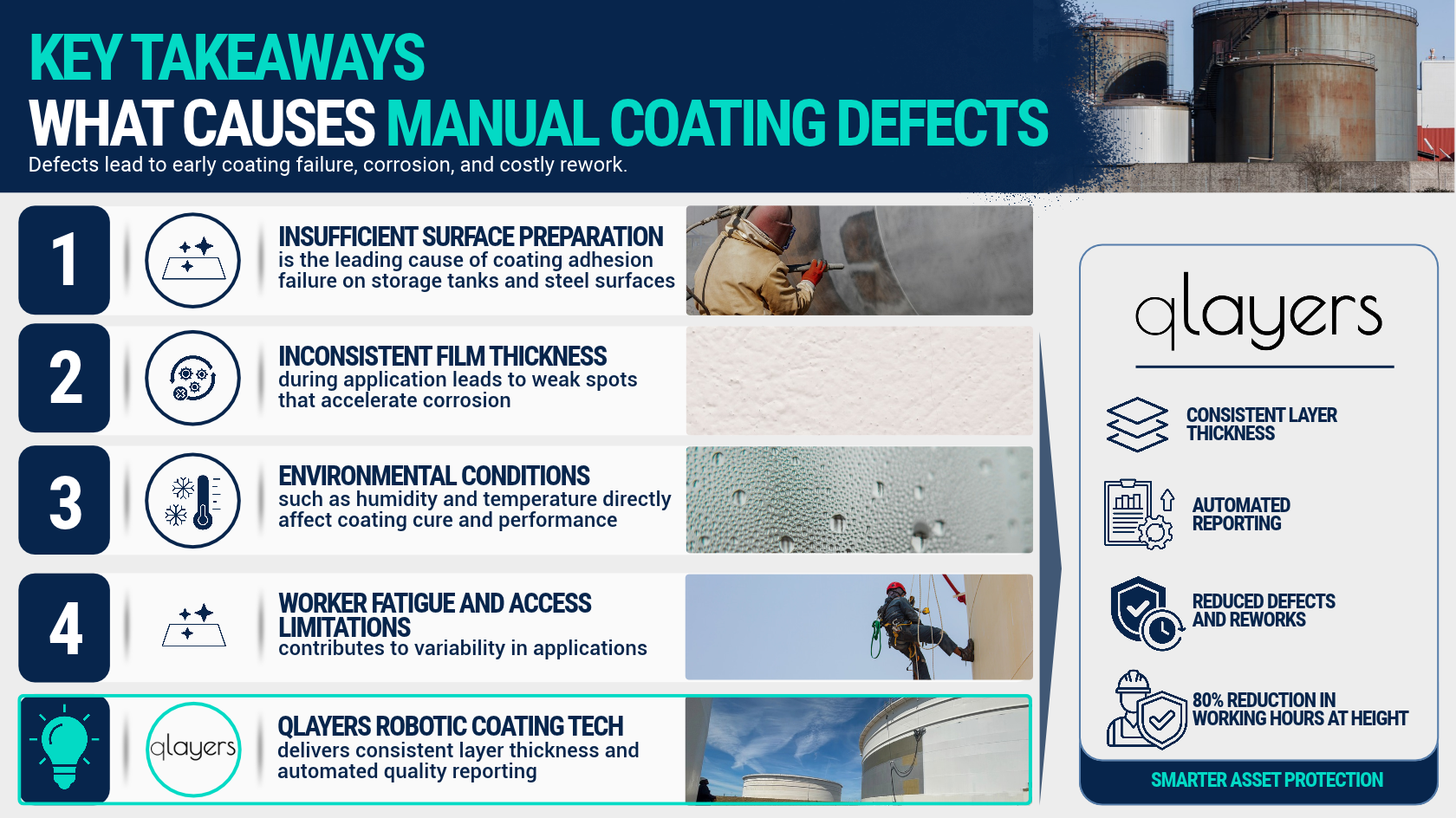
Infographic: four causes of industrial coating defects

What Causes Manual Industrial Coating Defects

When protective coatings fail on storage tanks and large steel assets, the impacts extend far beyond their appearance.


This often leads to early corrosion, unexpected downtime, and costly repairs.


For coating contractors and asset operators, understanding why industrial coating quality issues occur is the first step toward preventing them.


This blog post looks into the primary causes of industrial coating defects during application on storage tanks and industrial steel structures. You will learn what factors contribute to inconsistent results and how controlled application methods can reduce these risks.

Key Takeaways: What Causes Manual Industrial Coating Defects

  • Insufficient surface preparation is the leading cause of coating adhesion failures on storage tanks and steel surfaces.
  • Inconsistent film thickness during application leads to weak spots that accelerate corrosion.
  • Environmental conditions such as humidity and temperature directly affect coating cure and performance.
  • Worker fatigue and access limitations on large structures contribute to variability in applications.
  • Qlayers robotic coating technology delivers precise layer control and automated quality reporting, while keeping operators from heights and direct contact with hazardous paint materials

Why Does Surface Preparation Affect Coating Performance?

Surface preparation is widely recognized as the most critical stage of any coating process.


Contaminants such as oil, grease, salts, and rust products prevent coatings from bonding effectively with the steel substrate.


When surfaces are not properly cleaned according to standards like ISO 8501-1 or SSPC specifications, adhesion suffers regardless of coating quality or how well the coating process was done (1).


This means that even the most efficient protective systems can fail prematurely if the underlying surface remains contaminated.


Soluble salt contamination is particularly problematic on storage tanks. These salts draw moisture beneath the coating film, creating osmotic blistering that leads to early breakdown.

How Does Inconsistent Film Thickness Create Problems?

Looking at a Technical Data Sheet (TDS) of any paint formula, you will notice that every coating system has a specified dry film thickness (DFT) range.


Too thin, and the coating cannot protect against corrosion. Too thick, and internal stresses during curing cause cracking or delamination.


When spray coating a storage tank, achieving uniform thickness across large surfaces is particularly challenging. Variations in spray distance, overlap, and application speed all contribute to inconsistent results.


Although roller application is often used to minimize overspray, it remains time-consuming and can still produce paint droplets and splatter that may become airborne during windy conditions.


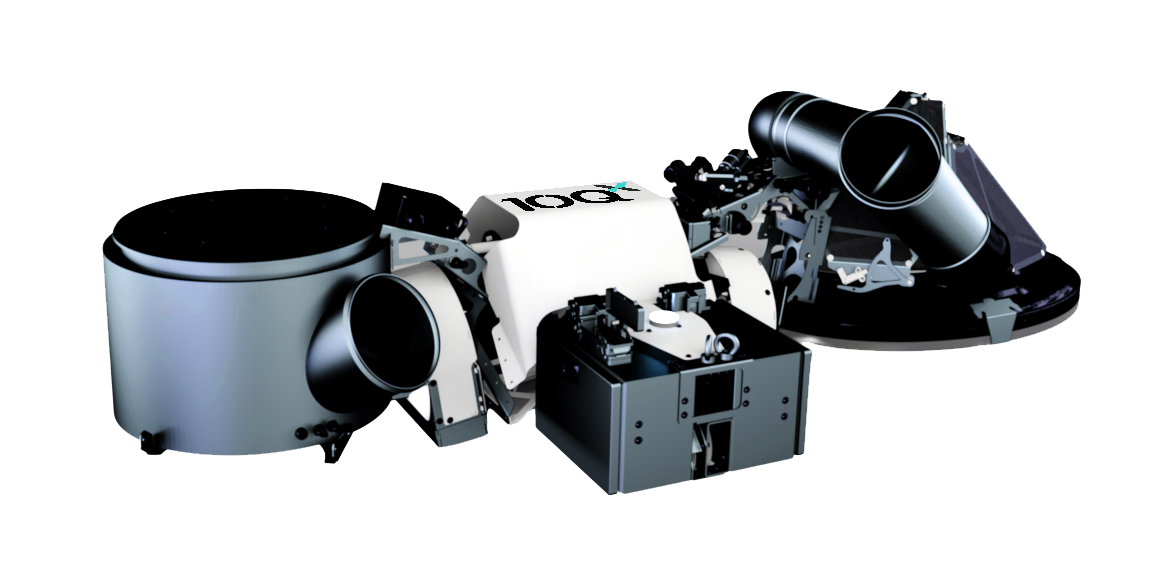
The Qlayers 10QX robot addresses this challenge by maintaining precise spray parameters across every square meter. Automated quality control measures layer thickness across the entire coated area, not just spot-checked locations.

What Role Do Environmental Conditions Play in Coating Defects?

Temperature, humidity, and dew point all influence how coatings cure and adhere. Applying coatings outside manufacturer-specified limits can lead to problems that may not appear for months.


As the substrate temperature approaches the dew point, condensation begins to form on the steel surface. The coating then traps moisture beneath the film, causing blistering and leading to adhesion failure. High humidity slows solvent evaporation and affects the cure chemistry.


The conditions for outdoor work on tank farms are constantly changing during the day, and by the afternoon, tasks that started off under acceptable conditions can become problematic due to rising temperatures.

How Do Access Limitations Impact Coating Quality on Storage Tanks?

The process of coating storage tanks involves considerable access difficulties.


In order to carry out painting jobs on large assets, painters usually work from gondolas, scaffolding, via by rope access. These setups create safety risks and physical challenges that can affect work quality.


It becomes difficult to maintain a consistent spray technique when coating applicators are working at extended reach or from unstable positions, and fatigue builds up during long shifts since the physical demands of the job cause variations in speed and coverage.


These access limitations also affect inspection capability.


Areas that are hard to reach during application are equally hard to inspect, meaning defects may go undetected until they cause visible failures.

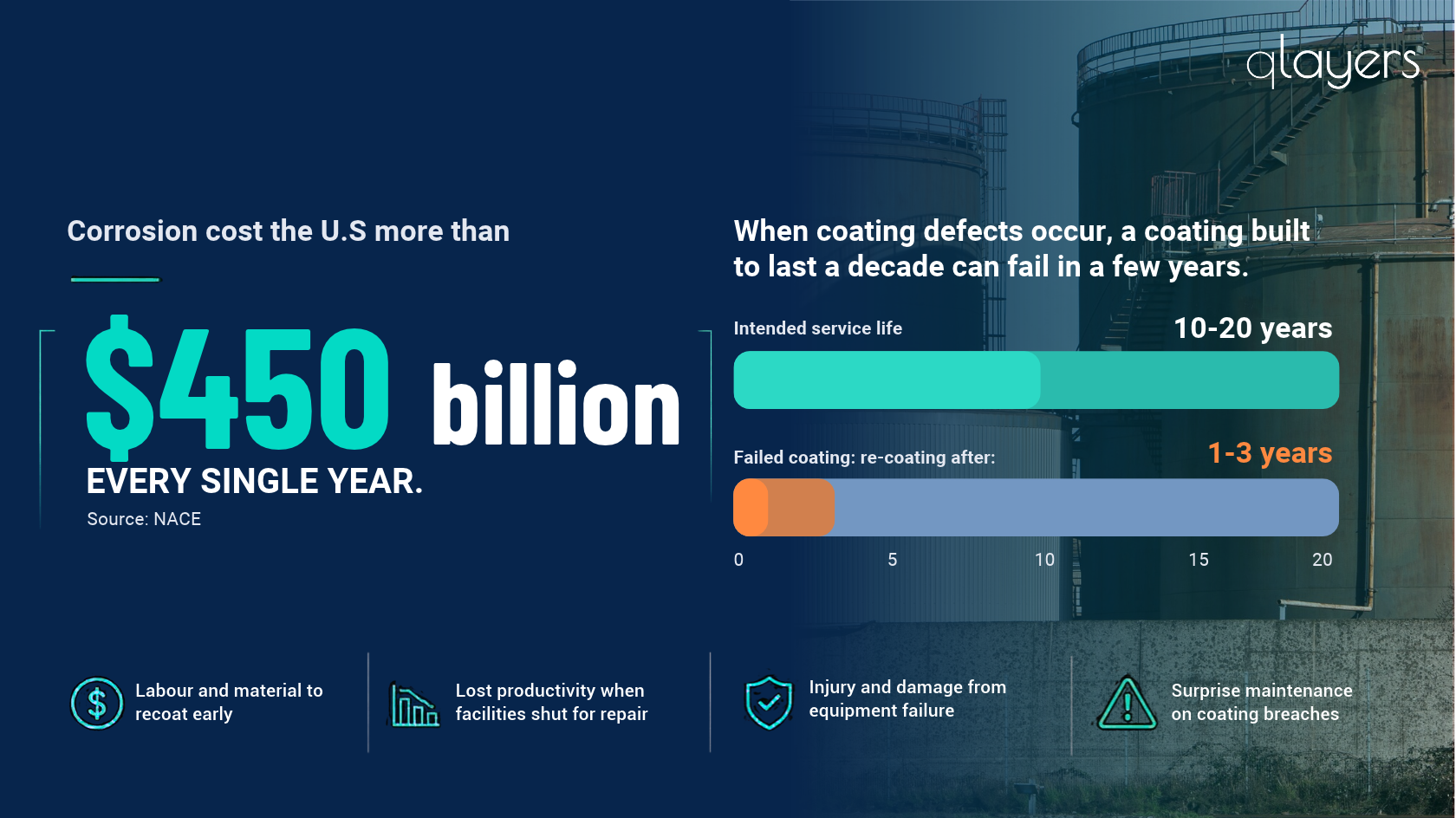
Infographic: corrosion costs the U.S. over $450 billion a year; coating defects can force recoating after 1–3 years, not 10–20

Why Do Recoat Timing Violations Cause Improper Coating Adhesion?

Coating systems are engineered as layered stacks, in which each coat must bond properly to the one beneath it.


Epoxy coatings have a maximum recoat window, and applying the next coat after this window expires prevents proper intercoat adhesion.


The result is a coating system that may look acceptable visually but will delaminate or peel under service conditions.


On large storage tank projects involving multiple crews and weather delays, accurately tracking recoat windows becomes challenging.

What Defects Occur When Application Technique Varies?

Industrial coatings rely heavily on the skill and judgment of applicators.


The wrong spray angles, irregular overlap patterns, and the application being done too quickly lead to defects which have an effect on long-term performance.


Common technique-related defects include:

  • Dry spray: Occurs when coating droplets partially dry before reaching the surface, creating a rough finish with poor adhesion.
  • Sagging and runs: Excess material flows downward before curing, causing uneven thickness and weak points.
  • Pinholing: Small holes penetrate the coating film create direct pathways for moisture to reach the substrate.

Robotic application eliminates this variability by maintaining consistent parameters regardless of operator fatigue or environmental stress.

How Can Automated Coating Control Reduce Defects?

Qlayers develops robotic coating solutions specifically designed for large-scale industrial assets. The technology addresses the root causes of application defects through precise process control.


The patented spray shielding system delivers up to to 90% transfer efficiency, meaning more paint reaches the surface, and less is wasted. This controlled environment also enables uniform film thickness across coated areas.


Operators control the system from ground level using an intuitive remote, reducing working hours at height by up to 80%. This improves safety while eliminating the fatigue and access limitations that contribute to inconsistent results.


When combining coating robots with surface preparation and inspection robots, asset owners and coating contractors can do away with scaffoldings, saving a large amount of money in their maintenance budget.


What Data Supports Quality Control in Robotic Coating? 

The Qlayers reporting dashboard collects data on key parameters throughout the coating process. This includes layer thickness, paint temperature, pump pressure, environmental conditions, and coverage area. Alongside the spot-checked measurements taken during inspection, this dataset covers the robot-coated surface. The two work together: inspectors keep verifying the result, while the system supplies a continuous report of how it was achieved.


Project managers receive daily reports documenting coating quality with full traceability. The same record also supports troubleshooting. The support team at Qlayers can access the report, identify challenges in the field, and support clients accordingly.


This automated quality reporting also supports a compliance function, providing detailed evidence of compliance with environmental and safety requirements and demonstrating that coating specifications were met throughout the project.
In Summary: Preventing Industrial Coating Defects

Most coating defects on storage tanks and large steel surfaces stem from predictable causes: inadequate preparation, inconsistent application, environmental violations, and access limitations. Understanding these factors is essential for any coating contractor or asset operator seeking to reduce rework and extend asset life.


Automated coating technology like Qlayers tackles these challenges through precise process control, extensive data gathering, and reduced reliance on working at height. For projects where coating quality directly affects asset integrity and operational uptime, robotic application offers a path to more consistent results.


If you are thinking of investing in an industrial robotic coating solution and don’t know where to start, check out our Definitive Guide to Industrial Painting Robots: Technology, Applications, ROI and Coating Quality


Qlayers is actively building towards that future, bringing the industry one step closer to truly autonomous coating operators across a wider range of assets and environments.


Ready to ride the wave?

FAQs About Industrial Coating Defects

What is the most common cause of coating failure on storage tanks?

Improper surface preparation causes the majority of coating failures. Contaminants, insufficient surface cleanliness (eg. Rust or millscale), and insufficient surface profile prevent proper adhesion regardless of coating quality. Qlayers robotic systems help reduce defects by keeping consistent application parameters after proper surface preparation. 

How does humidity affect coating application?

High humidity slows solvent evaporation and can cause condensation on steel surfaces. When coatings are applied over moisture, blistering and adhesion failures develop over time. Monitoring environmental conditions and stopping work when conditions exceed specifications prevents these issues.

Why do coatings crack on large steel structures?

Cracking typically results from excessive film thickness, incompatible coating layers, or thermal expansion and contraction of the substrate. Qlayers technology delivers precise layer thickness control that prevents over-application and the internal stresses it creates.

What documentation supports coating quality verification?

Qlayers provides automated reporting on layer thickness, environmental conditions, paint consumption, and coverage area for every project. This data creates a complete traceability record that supports quality verification and regulatory compliance in ways that manual documentation cannot match.

Do you want to learn more about Qlayers robotic painting solutions? Connect with us.